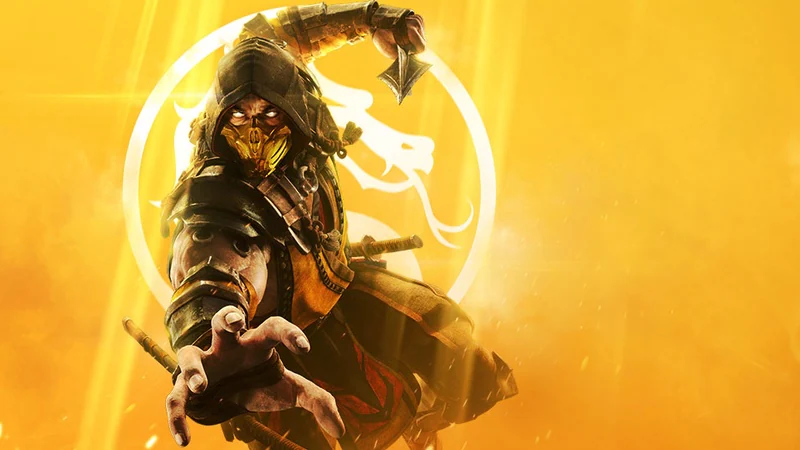
Mortal Kombat 11 brings a conclusion to a new trilogy of fighting games—a saga populated by ninjas, the undead, and a host of deities. It builds upon the strengths of Mortal Kombat 9 and Mortal Kombat X while incorporating elements from Injustice 2, another fighting game developed by NetherRealm. However, Mortal Kombat 11 also introduces some troubling features, most notably an aggressive array of microtransactions and loot-box-style mechanics.
Mortal Kombat X (2015) first introduced “easy” Fatalities—a move that effectively monetized one of the franchise’s most iconic features. Mortal Kombat 11 takes this further, leaning into the full spectrum of monetization strategies that have become standard in high-budget, “AAA” titles throughout this console generation.
The game features a wide variety of items available for purchase with real money, including player titles, consumables, character masks, intro animations, gear augments, match assists (which allow you to summon other characters or cast spells against opponents during a fight), additional Fatalities, taunts, and more. This is in addition to the Mortal Kombat 11 Season Pass, which adds further playable characters.
The in-game store is packed with paid content. While developer NetherRealm maintains that the game is not “pay-to-win,” the sheer volume of purchasable items is concerning—especially given that Mortal Kombat 11 is a premium, full-priced title (retailing at 3,499 rupees, or approximately $60 USD), rather than a free-to-play game like PUBG or Warframe.
To make matters worse, the game features a whole host of currencies. Time Krystals serve as the premium currency in Mortal Kombat 11. Priced anywhere from 416 to 3,300 rupees depending on the quantity, they are essential if you want to experience everything Mortal Kombat 11 has to offer.
On their own, Time Crystals might not be a major issue. But once you factor in Hearts, Souls, and Koins—the currencies required to craft specific pieces of gear—it quickly becomes clear that the in-game economy of Mortal Kombat 11 fails to account for the fact that you’ve already paid full price for the game.
As if that weren’t bad enough, the “Krypt” mode in Mortal Kombat 11 takes the game’s aggressive monetization to an extreme. In this mode, players explore an island belonging to series villain Shang Tsung, opening chests scattered throughout various locations to obtain gear for combat. Or, as we noted in our Mortal Kombat 11 review, the mode is essentially just a “loot box” simulator—and that is exactly what it is.
You also need to use the aforementioned souls, gold coins, and hearts to explore various areas of the dungeon. The amount of these currencies found in each treasure chest varies, and the game provides no information—not even a hint—regarding the odds of obtaining the items you want. This lack of transparency effectively turns the treasure chests into digital slot machines, making the acquisition of desired gear heavily dependent on luck.
Speaking of transparency, this stands in stark contrast to what series co-creator Ed Boon claimed before the game’s release. In an interview with Game Informer, Boon stated that Mortal Kombat 11 would not feature any loot boxes.
Clearly, Boon is holding something back. Mortal Kombat 11 features more than just loot boxes; the “Krypt” mode is essentially a game mode dedicated entirely to opening chests—perhaps the closest the series has ever come to an in-game casino.
Admittedly, some might argue that all of this is secondary, and that the core focus should be on the exceptional moment-to-moment gameplay of Mortal Kombat 11—a point not without merit. Indeed, the gameplay in Mortal Kombat 11 is truly superb. However, when you consider the heavy emphasis NetherRealm Studios places on character customization—allowing players to tweak both movesets and appearances—it becomes clear that this system was designed from the outset to extract even more money from players who have already purchased the game. And that’s not even accounting for the significant amount of time players must spend “grinding” to unlock the gear they actually want.
At its core, Mortal Kombat 11 is an entertaining, modern fighting game. It is a pity, then, that it employs a monetization model far better suited to a free-to-play mobile game than to a high-budget title for consoles and PC.