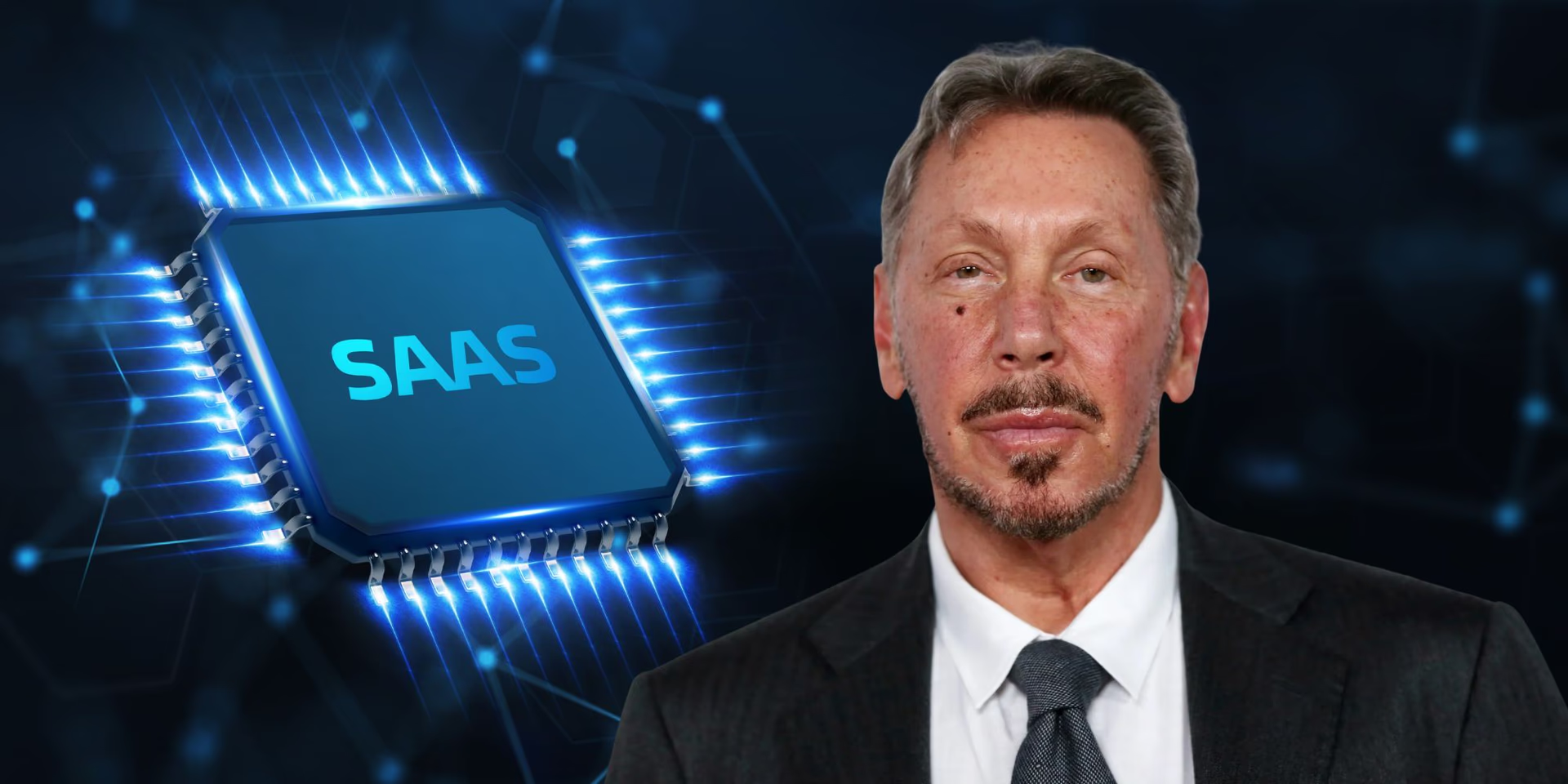
Has the “doomsday” narrative surrounding SaaS been overstated? Larry Ellison of Oracle suggests that artificial intelligence can make enterprise software easier to use, faster to deploy, and better tailored to specific industries.
Artificial intelligence is transforming the software industry, but Larry Ellison does not believe it will destroy it.
Larry Ellison—Oracle’s co-founder, executive chairman, and CTO—dismisses concerns about an “AI-driven apocalypse” for Software-as-a-Service (SaaS). He argues that rather than abandoning SaaS products to build their own applications from scratch, enterprises will leverage AI to enhance the software they use.
Speaking at the Oracle AI World conference in Las Vegas, Ellison stated that AI will not render traditional software obsolete. On the contrary, he believes AI can help software companies build more comprehensive, industry-specific applications.
SaaS refers to software delivered over the internet, typically via a subscription model. Some fear that AI could make it easier and cheaper for companies to develop their own proprietary tools, thereby weakening demand for existing software vendors. Ellison, however, sees it differently.
Why Ellison believes AI can improve software
Enterprise software often comes with inherent limitations. A hospital, bank, or hotel might purchase a commercial application, yet still require custom features, integrations, and third-party tools to meet its specific operational needs.
Ellison argues that AI can bridge this gap by enabling software companies to build more complete, industry-tailored applications. Oracle is currently developing software suites for a range of sectors, including banking, retail, hospitality, and government.
Healthcare is a primary focus, reflecting the inherent complexity of managing patient records, medical science, and hospital workflows. The goal is to move beyond software that only partially addresses an enterprise’s needs, toward systems that align with how specific industries actually function.
Oracle Health puts this vision to the test
Oracle Health is a cornerstone of Ellison’s vision. He notes that the division’s systems are designed with AI at their core—from user interfaces to installation processes—with the aim of making the adoption of new software as seamless as possible.
By allowing new modules to “understand” existing workflows, AI can accelerate value creation without the need for time-consuming and costly implementation projects. Ellison also criticized overly complex software interfaces that force users to toggle between multiple screens just to locate basic information. He believes that applications should function more like a conversation, allowing users to ask questions and receive relevant answers directly.
He maintains that while professionals still require training for their jobs, using business software should not necessitate extensive additional training.
Will artificial intelligence replace software development jobs?
Larry Ellison has also questioned the notion that AI will render all human roles obsolete. He likens AI tools to an airplane’s autopilot system, suggesting that while automation can boost productivity, humans will continue to play a vital role.
Nevertheless, he acknowledges that as automation technology advances, certain jobs—such as those of taxi or ride-hailing drivers—could indeed be displaced.
He further points out that as AI systems and robots generate greater economic value, governments may need to rethink their tax systems. One potential approach, he suggests, would be to tax the value added by automation, rather than relying primarily on taxes linked to human labor.
For Oracle, the opportunity lies in transforming AI—which could otherwise be seen as a threat to its software business—into a compelling reason for customers to purchase more powerful, advanced products. Whether the broader SaaS industry can successfully navigate this transition remains to be seen.